


A Parent’s Guide to Night-Time Lens Care for Ortho-K
Key Takeaway
- Ortho-K lens care is a daily routine, not a weekly one. What you do each morning keeps the lenses safe for the next night.
- Tap water must not touch the lens, the case, or any accessories. Water contact is one of the leading causes of serious eye infection for ortho-K wearers.
- Children whose parents stay involved in overnight lens care have fewer eye problems than those who manage on their own.
- Redness, pain, or light sensitivity after removing the lenses means contacting the optometrist that day, not waiting.
- Replace the lens case every three months and the lenses every 12 months.
Introduction
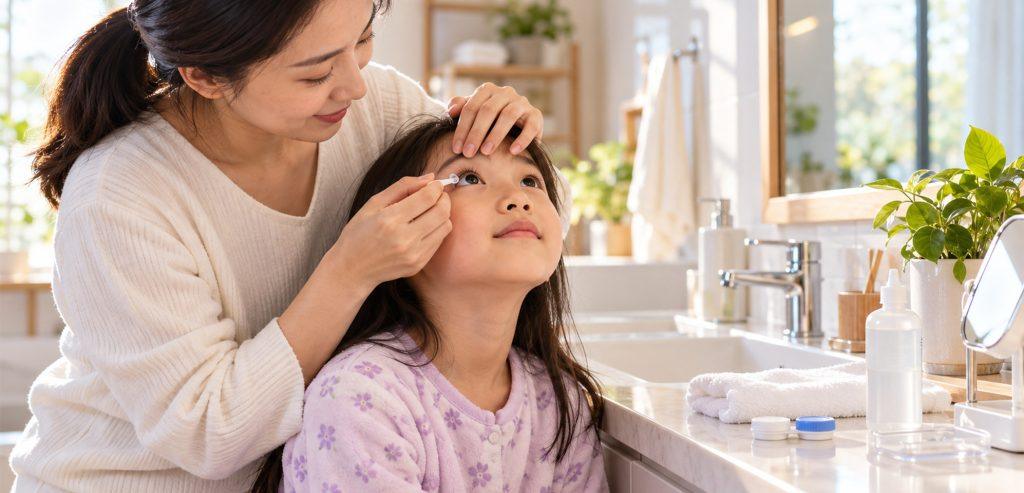
Ortho-K lenses gently reshape the surface of the eye during sleep so your child can see clearly through the day without glasses. The clinic handles the fitting. Everything that happens to the lenses at home each morning falls to you.
For families new to orthokeratology care, the routine involves a few specific products, a set order of steps, and some rules with no exceptions. Once it is familiar, it takes under ten minutes.
Why the Morning Routine Matters
Putting the lenses in before bed is straightforward. The part of overnight lens care that takes more care is what happens after they come out.
Three things to understand:
- Residue builds up overnight. Each lens picks up proteins and debris from the eye during sleep. If this is not cleaned off, it accumulates on the lens surface and affects how well it works.
- The eye is more exposed. While your child sleeps, the lenses sit directly against the surface of the eye for hours without blinking. Contamination left on the lens from the previous night stays in contact with the eye the whole time.
- You control the daily routine. The fit and material are set at the clinic. Good ortho-K lens care and contact lens hygiene every morning is what keeps the treatment running safely at home.
The clinic decides whether ortho-K is right for your child. What happens at home each morning is what keeps it safe.
The Morning Cleaning Routine
Your optometrist will confirm the products to use. Follow their instructions above the general steps below.
Step 1: Wash and dry your hands
Use a plain, fragrance-free soap with no moisturisers or oils. These leave a film that transfers to the lens surface. Dry thoroughly with a lint-free cloth or paper towel. Regular towels leave fibres.
Step 2: Remove the lenses
Use the removal tool from your fitting or the technique the optometrist showed. Do not press fingernails onto the lens. Handle one lens at a time and keep them marked right and left from day one.
Step 3: Always rub, not just rinse
Add a few drops of solution to the lens in your palm and rub gently in circles for about 20 seconds each side. Research on infection risk in ortho-K wearers points to skipping this step as one of the main causes of serious eye infection. Rinsing alone does not clear what builds up overnight.
Step 4: Rinse with the right solution
Use only the solution your optometrist recommended. No tap water, bottled water, or saline.
Step 5: Refill the case with fresh solution
Pour out all the old solution. Do not top it up. Used solution loses its disinfecting strength and carries contamination from the soak before. Refill completely, place the lenses in, and close the case.
Step 6: Clean the case
Rinse the case with solution, rub the inside with a finger, and leave it face-down on a clean tissue to dry. Skipping this lets a thin layer of germs build up between uses.
Why Tap Water Is Off-Limits
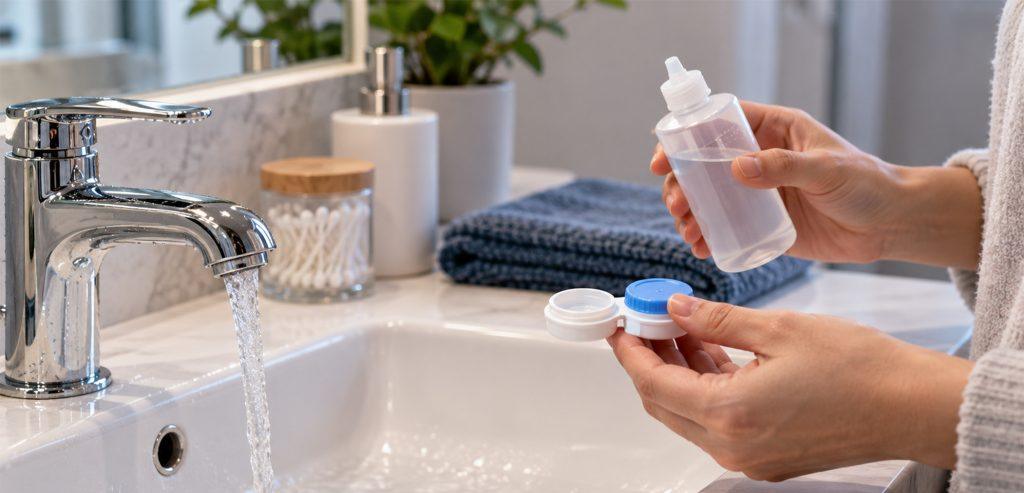
Tap water contains a microscopic organism called Acanthamoeba. In everyday life, it causes no harm. On a contact lens touching the surface of the eye, it can cause Acanthamoeba keratitis, a serious infection that can cause lasting damage to vision.
Research on orthokeratology care and infection risk found that water contact was one of the main causes of this infection, along with missing hand washing and skipping the rubbing step. In a separate review, 87.8% of those who developed it had rinsed their lenses or case with tap water.
Keep water away from:
- The lenses and the case
- Your hands before they are fully dry
- Your child’s eyes while the lenses are in. Lenses come out before swimming, showering, or bathing.
- The area around the sink when lenses are being handled
Why Staying Involved Makes a Difference
When children manage the routine alone, the rubbing step and case cleaning are the first to get shortened. Both are linked to infection risk. Studies on parental involvement in ortho-K routines consistently show that children whose parents stay involved have fewer complications than those who manage independently.
You do not need to do every step for your child. Once the habit is consistent, checking in works fine: did they rub the lenses? Did they clean the case? Being close to the routine in the early weeks is when it makes the most difference.
Your child may also not mention when something feels off. Asking each morning means you are more likely to catch redness or unusual watering before it becomes a bigger issue. Good contact lens hygiene at home is something you both build together.
What to Watch For Between Appointments
Your optometrist reviews the lenses and the eye surface at scheduled check-ups. Between visits, you are the first to notice anything unusual.
| Sign | What to do |
| Redness or irritation that does not settle after removal | Remove the lenses and contact the optometrist |
| Pain during or after wear | Remove immediately and call the clinic |
| Sensitivity to light | Remove lenses and seek a same-day review |
| Blurry vision after removing the lenses | Contact the optometrist |
| Discharge or more watering than usual | Remove the lenses and contact the optometrist |
| A lens that feels odd or is harder to take out than usual | Do not force it; mention it at the next visit |
Do not wait to see if things settle. Eye issues caught early are much easier to deal with. Contact Optika Optometrist through the appointment page if you think something needs attention today.
What Your Child Needs Each Morning
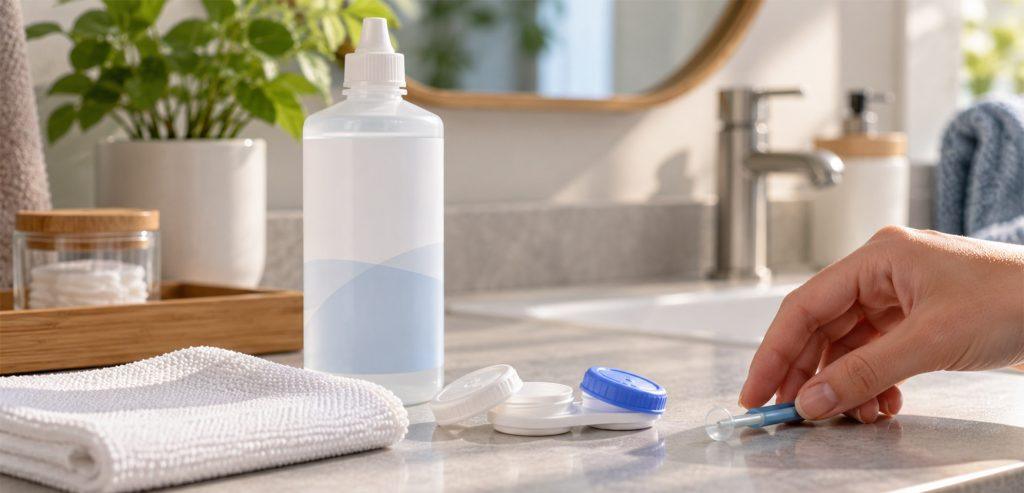
For the daily routine:
- The solution your optometrist recommended
- A dedicated lens case
- A lint-free cloth or paper towels for drying hands
- The removal tool from the fitting
Replacement schedule:
- Lens case: every three months
- Lenses: every 12 months, or as advised
- Solution: before the expiry date; do not stockpile open bottles
Do not switch solution brands without checking with the optometrist first. Different products work differently with ortho-K lenses.
What Optika Covers at the Fitting and Follow-Up
When your child picks up their lenses at Optika Optometrist, the appointment includes a hands-on walkthrough of insertion, removal, and the cleaning routine before you leave.
The morning after the first night of wear, there is a follow-up visit so the optometrist can see how the eye has responded. Later appointments track whether the reshaping is on course and the lenses are in good shape. For anything in between, the contact and booking page is the right starting point.
Frequently Asked Questions
1. How long does the ortho-K lens care routine take?
Around five to ten minutes once everyone knows the steps. Allow a bit longer in the first few weeks. Do not rush the rubbing step: that is where shortcuts create problems.
2. Can my child do this on their own?
Younger children and those still learning the routine do better with you nearby until each step is consistent. Once it is, occasional check-ins work well. Focus on whether the rubbing step and the case cleaning are being done.
3. What if a lens gets dropped?
If it falls on a clean surface, rub it with solution, rinse with solution, and check for chips or scratches before using it. If it fell somewhere dirty, do not use it that night. Clean it, soak it in fresh solution, and check it the next morning. Call the optometrist if you see any surface damage.
4. Does being sick mean stopping the lenses?
A mild cold is fine to continue through, as long as the eyes look and feel normal. Pink eye or any eye infection means stopping until the optometrist says it is safe to resume.
5. When do the lenses need replacing?
Your optometrist will advise at the annual check. Between visits, replace them straight away if you see chips, cracks, or scratches, or if they keep causing discomfort that cleaning does not fix.
Ortho-K depends on the daily routine staying consistent. Lenses cleaned properly each morning, kept in a well-maintained case, and monitored by someone who knows the warning signs stay safe throughout the treatment. To get started or ask about the ortho-K lens care routine, book an appointment at Optika Optometrist in Damansara Uptown.