


What Makes Thom Browne Eyewear Stand Out From Other Designer Frames?
Key Takeaway
- Thom Browne Eyewear comes from the fashion house itself, not a licensed manufacturer, so the four-bar stripe, the silhouettes, and the material standards are all set in-house.
- The brand makes its frames in Japan using special titanium or Japanese acetate, with the four-bar stripe engraved into the nose pads on titanium models and custom hinges built to hold tension through daily wear.
- Titanium suits all-day wearers who want a light, low-maintenance frame; acetate suits those who want something more visible and substantial.
- If you have a strong prescription, acetate is worth considering because the frame is thick enough to hide the edge of the lens, keeping the finished pair looking clean.
- Optika Optometrist carries the range and fits prescription lenses in-house, so frame selection and lens confirmation happen at one appointment.
Introduction
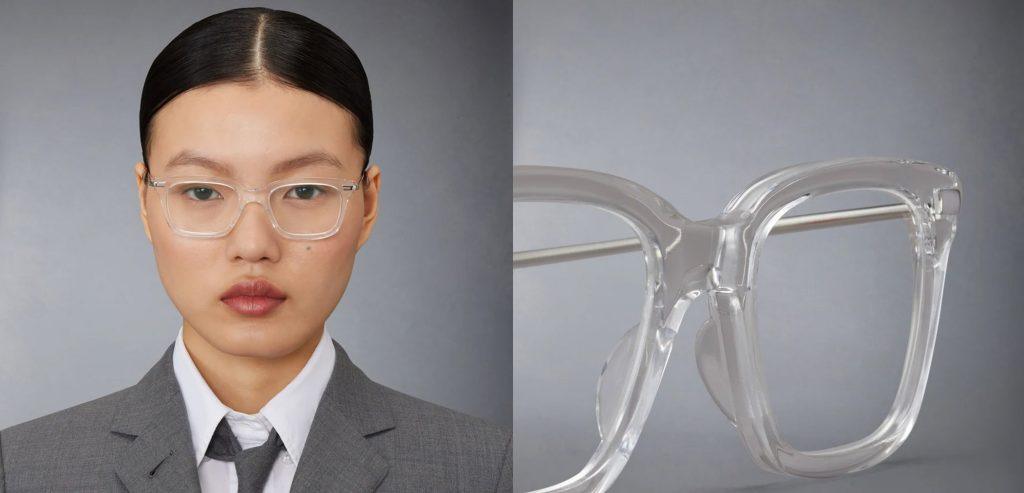
Thom Browne built the fashion house on one idea: proportion matters as much as fabric. The brand launched in 2001 with five made-to-measure suits sold by appointment in New York’s West Village. What made them unusual was not the fabric or the price, but the proportions. The jackets were shorter and narrower than anything else in menswear at the time. The trousers broke above the ankle. The industry called it eccentric, and within a few years, slim tailoring was everywhere.
Rather than licensing frames to a manufacturer, the fashion house designs and produces its eyewear through the same in-house process as the rest of its accessories. Every pair carries the four-bar stripe that runs across the clothing range, and production happens in Japan to the same materials standard. If you want to understand what separates these frames from other options at the same price, the full style and pricing guide for Thom Browne eyewear in Malaysia covers the specifics in detail.
What Is the Design Logic Behind Thom Browne Glasses?
Proportion comes first. The silhouette gets decided before anything decorative, and the four-bar stripe sits where it structurally belongs rather than on top as an afterthought. Classic shapes form the base: round, rectangular, and aviator styles, each built with current materials rather than following seasonal trends.
At the temple tips, the red, white, and blue four-bar stripe acts as a signature rather than a logo. It runs at the same size across every frame, optical and sunglasses alike, in titanium and acetate. On titanium models, the stripe also appears engraved into the nose pads, a detail you will only notice when you look closely.
The hardware stays minimal throughout. No oversized logos on the temples, nothing decorative added to the frame, and the colourways stay consistent across seasons rather than changing with trends.
Thom Browne Eyewear carries the same logic as the clothing: the proportions are fixed first, the silhouette stays clean, and the signature is built into the construction rather than placed on top.
What Materials Are Thom Browne Glasses Made From?
The design logic carries into the materials. Two choices define the range: special titanium and Japanese acetate, both produced in Japan.
Titanium frames are ultra-thin and lightweight, built to handle daily wear, including drops and impact. The nose pads adjust to fit a wider range of nose bridge widths than fixed pads. Custom hinges keep the temples in position through extended wear, rather than gradually loosening the way standard hinges do.
Japanese acetate takes a different approach. Makers tumble and mix it over several months before cutting, which develops its depth and surface finish. For wearers with stronger prescriptions, the frame thickness works in your favour: it hides the edge of the lens, so the finished pair looks clean regardless of lens power.
If you wear prescription lenses, acetate frames handle stronger lens powers well because the frame depth absorbs the lens edge rather than leaving it visible.
How Do Thom Browne Glasses Compare to Other Designer Eyewear in Malaysia?
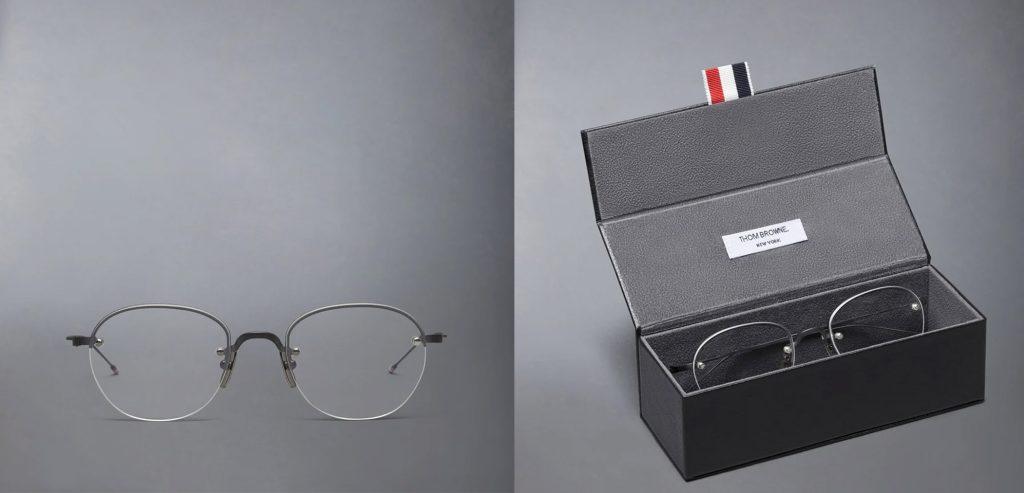
The key question when comparing luxury glasses at the same price is whether the fashion house designed the frame or handed it to a manufacturer.
When a label licenses its name to an eyewear manufacturer, that manufacturer designs and builds the frame, then applies the brand name at the end. You get a logo on the temple and little of the brand’s actual input into how the frame looks or holds together.
Thom Browne controls its visual language tightly, and the four-bar stripe is trademarked to reflect that. The brand took Adidas to court to defend it, winning in the US in January 2023 and in the UK and Germany in 2024, a legal outcome documented in detail here. That level of legal investment tells you the stripe is a core part of the brand, not a surface decoration.
| Feature | Thom Browne frames | Typical licensed designer frames |
| Design origin | In-house by the fashion house | Licensed to eyewear manufacturer |
| Manufacturing | Japan (titanium and acetate) | Varies; often Italy or China |
| Signature detail | Four-bar stripe, engraved nose pad | Logo on temple, decorative hardware |
| Frame construction | Custom hinges, special titanium option | Standard hinge configurations |
| Prescription suitability | Acetate depth hides lens edge on strong prescriptions | Varies by frame |
Which Thom Browne Frame Suits You?
Your lifestyle and prescription both play a part in which material works better for you. Titanium suits anyone who wears glasses all day and wants a frame that feels unobtrusive: light, stable, and comfortable enough to forget about through a full day. Acetate works well for wearers who want more presence from the frame, with the four-bar stripe showing clearly against a thicker temple.
For stronger prescriptions, acetate is worth considering because the frame depth hides the lens edge. If lens index is part of your decision, read about how to choose the right lens index for your prescription before you pick a frame.
Frequently Asked Questions
1. What makes Thom Browne Eyewear different from other luxury glasses?
Thom Browne Eyewear comes from the fashion house itself rather than a licensed manufacturer. The brand makes the frames in Japan using special titanium or Japanese acetate, with custom hinges and the four-bar stripe engraved into the nose pads on titanium models.
2. Are Thom Browne glasses made in Japan?
Yes. Titanium versions use a special titanium construction built for lightweight wear and impact resistance. Acetate versions use Japanese acetate that makers tumble and develop over several months before cutting, which gives the material its depth and surface quality.
3. What does the four-bar stripe on Thom Browne glasses mean?
The four-bar stripe runs across the clothing, footwear, and accessories range as the house’s signature detail. On eyewear, it appears at the temple tips and is engraved into the nose pads on titanium models. Thom Browne took Adidas to court to defend the trademark, winning in the US in January 2023 and in the UK and Germany in 2024.
4. Can I get Thom Browne frames with prescription lenses at Optika?
Yes. Optika Optometrist carries the range and fits prescription lenses in-house. If you need an eye examination first, you can arrange that at the same visit. Acetate frames work well for stronger prescriptions because the frame depth hides the lens edge.
5. How does Thom Browne fit into the designer eyewear Malaysia market?
Thom Browne sits at the premium end. The fashion house designs the frames in-house rather than licensing them out, produces them in Japan using special titanium or Japanese acetate, and holds a trademark on the four-bar stripe it has defended in court.
These frames come from the same team behind the clothing, made to a specific brief using Japanese materials and construction standards. Because the design stays in-house, the four-bar stripe, the silhouettes, and the material choices are all the brand’s own. At Optika, you can try Thom Browne Eyewear in person and see how each material sits on your face before committing. Prescription lenses are fitted in-house, so you leave with a confirmed frame and lens combination. If your prescription is not current, a full eye examination can be done at the same appointment, so nothing is ordered until everything is confirmed.