



Myopia Management for Busy Parents: When Should You Seek Advice?
Key Takeaways
- Kids often notice visual changes later than you’d expect. Not all children vocalise blurry vision immediately, many adapt passively without informing their parents. Things like squinting, preferring to sit closer to screens and drifting during classroom tasks are often confused with habits rather than potential vision issues.
- Screen routines and lifestyles can impact comfort with vision. A typical child now spends several hours a day engaging with a screen (computer, tablets etc.) in addition to schoolwork, leading to long visual hours and sedentary time during their school years. The child’s vision health needs to be a factor in setting healthy routine limits that allow for proper breaks and more outside time.
- Regular vision check-ups facilitate recognition. This allows parents to track prescription increases or to see other vision issues in a child before it becomes apparent in classroom performance or general life activities.
- More goes into myopia management than glasses. Myopia management can involve eye growth tracking, lifestyle advice, vision therapy tools, and regular monitoring by eye care professionals depending on individual needs.
- Vision changes need not cause anxiety. When it comes to a child’s vision, knowledge is power and having that knowledge can bring the family much comfort over time.
Introduction
Many parents are often unaware that their child may have visual problems until the subtle symptoms start to appear in the home environment or in school, such as your child starting to sit too close to the television, straining to see their whiteboard at school, or complaining of headaches after schoolwork. Often the changes to your child’s behaviour may start quite slowly making them easy to confuse for tiredness, inattention or everyday screen habits.
Data from an extensive global review published in the British Journal of Ophthalmology, showed that the prevalence of myopia in children and adolescents has risen from 24.32% in 1990 to 35.81% in 2023, and is expected to reach close to 40% by 2050. The data also stated that the worldwide rise in childhood myopia has been influenced by lifestyle, long periods of close visual work and the lack of time spent outdoors.
In this blog, we will cover the early warning signs for myopia in children, the importance of having regular eye tests and when you should be seeking advice.
Why is Myopia Becoming More Common Among Children?
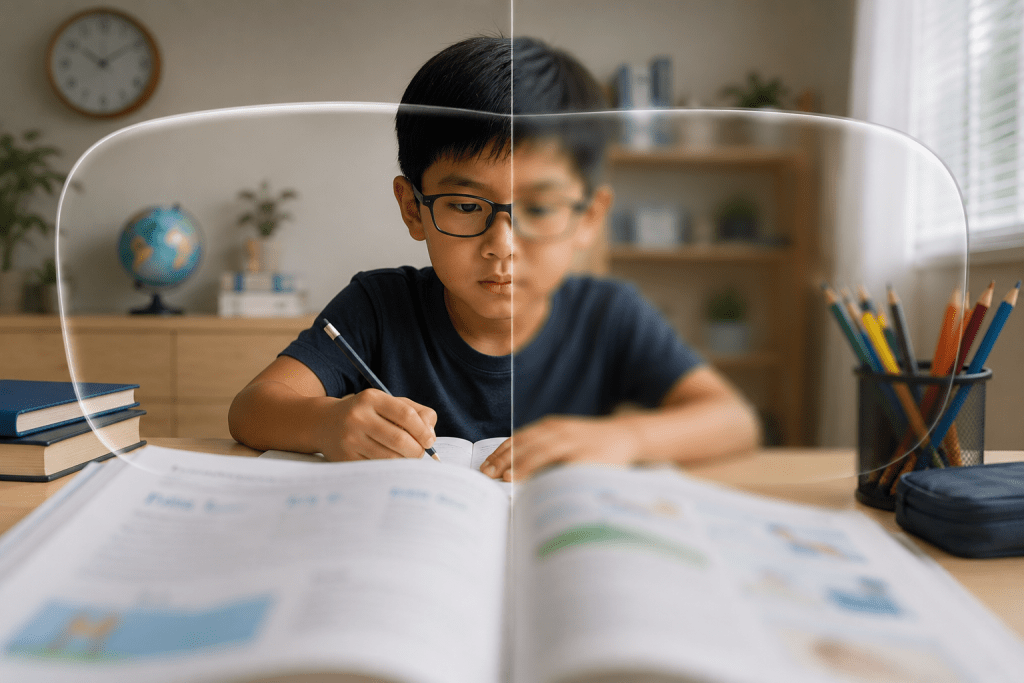
In this age, a significant proportion of the time that children spend is looking at something up close. This includes school work, learning online, studying, using tablets, smartphones, and other indoor entertainment.
- The fact remains that technology alone is not what causes myopia, but lifestyle trends have changed tremendously since then. Modern-day children don’t spend as much time outdoors as their predecessors, especially in urban settings where they engage in study-related activities all day long.
- Many parents who are interested in myopia control Malaysia will start their research when they realise that their child is having difficulty seeing distant objects clearly. But there are some cases in which myopia progression is so silent that no symptoms show up for some time.
- Near tasks like prolonged reading and long hours using electronic devices can be a possible cause of visual stress for children. The solution to this problem doesn’t include banning technology but developing healthy visual habits and balanced schedules.
Awareness is important for parents in this case because children might not even know their vision has become worse. In fact, many children think that everyone else sees things the way they do.
Early Signs Parents Often Miss
Myopia’s early symptoms aren’t always glaring. More often, the behaviors present more insidiously and subtly at first.
- In some children, parents observe that they squint to see far away things. Others sit closer to the television, the tablet, or the board at school, without offering any explanation for why they do this. Some parents simply understand their children to prefer sitting in closer proximity, and not realise their child might have an eye problem.
- Eye strain may even produce headaches after schoolwork, where their eyes ache from holding a clear focus. Parents also may occasionally consider whether frequent rubbing of eyes, unusual blinking, or trouble concentrating at book work could possibly signal an eye issue.
- Other children may become disengaged in games and sports where they are expected to see clearly. Others may drift away from books and school work simply because eye strain fatigues their concentration.
- Parents investigating myopia control Malaysia services are often amazed at a child’s ability to adapt. The majority of children do not drastically falter during the progression of myopia, which makes scheduled eye exams an important aspect of their school-aged years.
The hope is not to instill an alarm for every subtle behavior; rather, the aim is to know when chronic patterns may warrant examination by a professional.
Why Are Routine Eye Checks Important for School-Age Children?
Regular eye checkups are essential in providing adequate learning, comfort and an effective means to monitor eye development of children in the long term. Due to the developing stages of a child’s eyes during the school age, their prescriptions can change gradually over time.
- The professional eye test Malaysia service enables optometrists to examine children not only on the clarity of their sight but also their eye comfort levels while reading, working on a computer and participating in daily class activities.
- Sometimes, parents may believe that their child will definitely voice out his/her vision problem once it becomes noticeable. However, many children often get used to blurred vision without realising any change to their vision, so eye checkups that are arranged at regular intervals are often beneficial.
- Practicing optometrists at optometrists Malaysia clinics can track down your child’s change of prescription levels, evaluate their visual behavior patterns and also advise appropriate treatment for them according to the specific child’s situation and routine habits.
- Routine checkups can bring comfort and confidence to the parents. Instead of awaiting a significant drop in school performance or the manifestation of discomfort, routine checkups can offer you insights to your child’s growing eye vision levels.
For many children, eye checkups can be considered to have moved on from fixing vision problems and rather aimed to ensure and instill healthy vision practices at childhood.
What is Myopia Management?
Many parents assume myopia management simply means prescribing glasses once a child becomes short-sighted. In reality, the concept is broader and focuses on monitoring and managing how myopia progresses over time.
Myopia control Malaysia services may involve several approaches depending on the child’s prescription, age, lifestyle, and visual habits. The aim is usually to support clearer vision while monitoring long-term changes carefully.
Management plans sometimes include:
- Regular monitoring appointments
- Lifestyle guidance
- Specialised spectacle lenses
- Contact lens options
- Visual habit adjustments
Parents often feel overwhelmed when first researching myopia management because of unfamiliar terminology. However, most professional guidance focuses on practical, manageable steps rather than complicated medical procedures.
The process also varies between children. Some may only require monitoring and simple lifestyle adjustments, while others benefit from additional management approaches recommended by eye care professionals.
What matters most is that parents seek information early enough to make informed decisions calmly rather than waiting until symptoms become more disruptive.
What Are The Common Management Approaches?
There is no one size fits all for every child developing myopia. Eyecare professionals generally provide several choices that cater to your child’s individual needs, vision demands and prescription alterations.
- Lifestyle advice is often one of the first things that is introduced. Outdoor activity, screen breaks, lighting levels and even holding books a healthier distance from eyes.
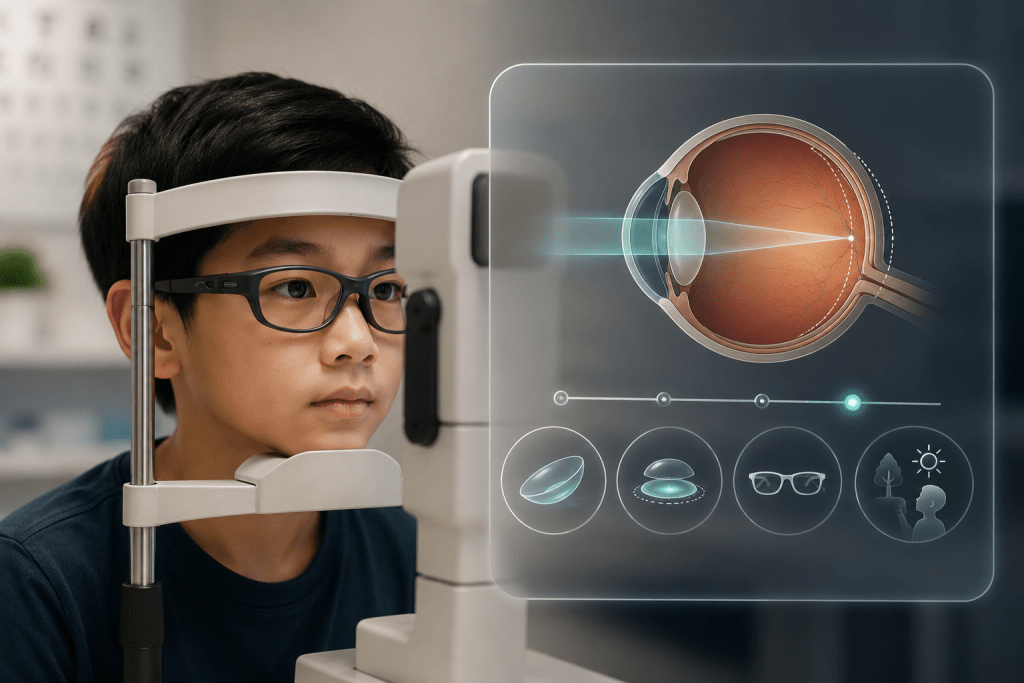
- Some children use specially designed spectacle lenses intended for myopia management support. Others may explore contact lens-based approaches such as ortho-K Malaysia services, which involve specially fitted overnight lenses designed to temporarily reshape the cornea.
- Parents researching ortho-K Malaysia options sometimes worry the process sounds intimidating. In reality, professional guidance usually focuses on suitability, hygiene routines, and whether the child is comfortable managing the lenses responsibly.
- Experienced optometrists Malaysia providers also help families understand that myopia management is typically a long-term monitoring process rather than a quick solution. Consistency, follow-ups, and healthy visual habits often remain important parts of the overall approach.
The goal is not perfection. Instead, it is supporting children’s visual comfort and monitoring changes carefully as they grow.
Common Signs Parents Should Monitor in Children’s Vision
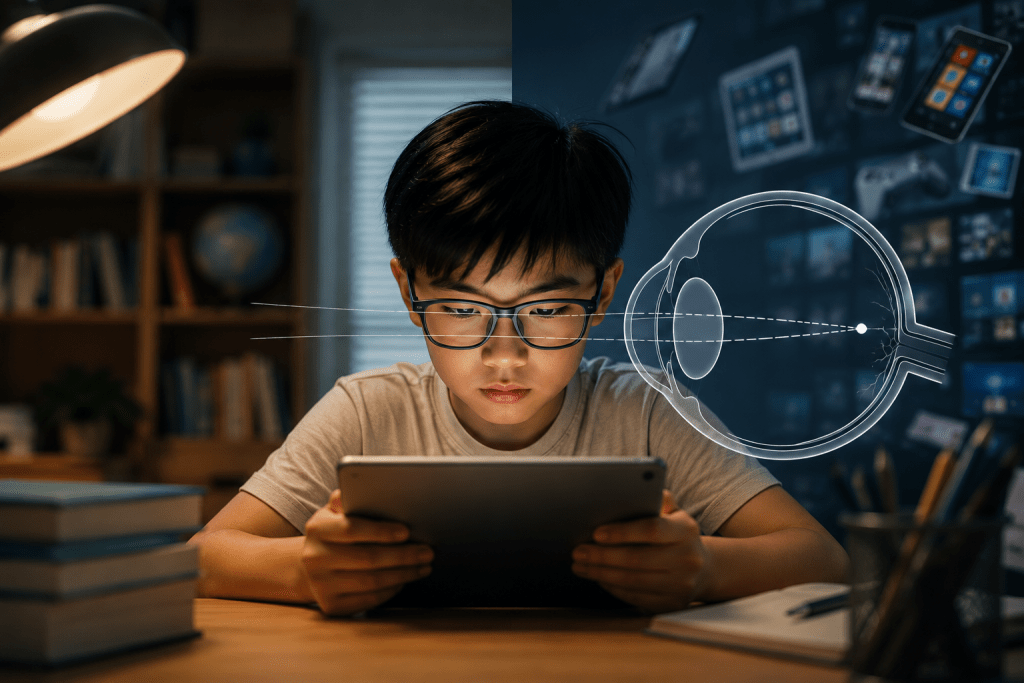
Children often show subtle signs when their vision begins to change, and recognising these early can help parents take timely action before it affects learning or daily comfort.
| Behaviour or Sign | What Parents May Notice? | Why an Eye Check May Help? |
| Squinting | Child narrows eyes while focusing | May indicate difficulty seeing clearly at distance |
| Sitting Too Close to Screens | Child moves very near televisions or tablets | Helps assess whether distance vision has changed |
| Headaches | Complaints after reading or homework | Eye strain or prescription changes may contribute |
| Eye Rubbing | Frequent rubbing during study sessions | Could signal visual fatigue or discomfort |
| Difficulty Reading Classroom Boards | Child struggles seeing distant text | Vision assessment may identify short-sightedness |
| Reduced Concentration | Child loses focus during reading tasks | Visual discomfort can affect attention span |
| Holding Books Too Closely | Reading materials held unusually near | May suggest difficulty focusing comfortably |
| Complaints About Blurry Vision | Child mentions unclear distance vision | Professional assessment helps identify possible causes |
Building Better Eye Care Habits at Home
Children often keep looking at screens even when their eyes feel strained due to absorption in games, video programs or schoolwork. Soft cues throughout a child’s studying sessions may help to prevent eye strain. Children naturally change their focus in the outdoor environment and for this reason, outdoor time is also beneficial. It’s often balance rather than rigid rules about screens that is important.
Parents do not need perfect routines to support healthier visual habits for children. Small everyday adjustments often make a meaningful difference over time.
Simple habits that may support visual comfort include:
- Encouraging regular screen breaks
- Improving study lighting
- Balancing indoor and outdoor activities
- Maintaining comfortable reading distances
- Supporting healthy sleep routines
Families exploring myopia control Malaysia options often discover that long-term visual care involves both professional monitoring and healthier daily habits at home.
Parents should not feel pressured to manage everything alone. Seeking advice early can help families approach children’s eye health with greater confidence and clarity.
Conclusion
Children’s changes in vision typically develop subtly; therefore actions such as squinting, sitting closely to the screen, or struggling to see far objects should be recognised out of curiosity rather than panic. Proactive parents can then address their child’s condition early, before small behavior changes have the potential to dramatically impact a child’s studies and daily activities. Managing myopia does not mean making a crisis of screen time or becoming a paranoid presence constantly hovering over your child’s every move.
For parents worried about their child’s vision shifting, early guidance can make a big difference, even if it feels small at first. Since July 2012, Optika Optometrist has been helping families through professional eye exams, including Orthokeratology (Ortho‑K), myopia tracking, contact lens checks, and customised eye care solutions that match your child’s visual growth.
With 13+ years of experience, their trained optometrists do detailed evaluations that go further than a basic vision scan, so parents can stay on top of prescription updates, day‑to‑day visual habits, and management options available. Whether it’s a routine eye assessment or a longer conversation about specialised support like myopia control and contact lenses, each consultation is aimed at your child’s own situation, not a one‑size‑fits‑all approach.
Optika also gives you access to 5+ trusted contact lens brands, including Acuvue, Air Optix, Freshkon, Focus Dailies, and MiaCare, plus premium eyewear collections from internationally recognised names like Ic! Berlin, Yellows Plus, and DITA.
Make an appointment with Optika Optometrist today and take a proactive step for your child’s eye health with reliable professional care, advanced assessments, and more than a decade of experience serving families across Malaysia.
FAQs
- What is myopia management?
Myopia management refers to approaches used to monitor and help manage the progression of short-sightedness in children over time.
- At what age should children get eye checks?
Many eye care professionals recommend regular eye checks during school-age years, particularly if children show signs of visual discomfort or family history of myopia.
- Can screen time worsen myopia?
Extended near-work activities and prolonged screen exposure may contribute to visual strain and are often discussed alongside myopia development patterns.
- What is ortho-k treatment?
Ortho-k involves specially fitted overnight contact lenses designed to temporarily reshape the cornea while sleeping.
- When should parents seek advice for children’s vision concerns?
Parents may consider seeking professional guidance if children frequently squint, complain of headaches, sit close to screens, or struggle seeing distant objects clearly.