



Why Your Old Prescription May Not Match Your Current Lifestyle
Key Takeaway
- Getting an eye prescription in Malaysia gives you a snapshot of how your eyes performed on that day, not a permanent record of your vision.
- Visual demands change constantly. More screen time, longer reading sessions, night driving, or a shift in your routine can make an old prescription feel wrong before it technically expires.
- Adult prescriptions change for several reasons: lenses stiffen with age, close work increases, health shifts, and vision can drift gradually over time.
- Wearing a glasses prescription that no longer matches your eyes does not just mean blurry vision. It can cause headaches, fatigue, and difficulty focusing that builds gradually until it feels normal.
- If you notice any of the signs in this article, a prescription check is the right next step, not a new pair of glasses based on old numbers.
Introduction
A lot of Malaysians are spending their days differently from how they were three years ago. More hours at a laptop, more late nights squinting at a phone, more commutes swapped for home offices. The prescription in your glasses was measured for the life you had when you last sat in an optometrist’s chair, not the one you are living now.
Prescriptions do not come with an expiry alarm. They sit quietly in your frames until something feels off: a dull headache by mid-afternoon, difficulty reading signs at night, eyes that take a moment too long to adjust. By then, compensating can have been going on for months without realising it.
Why Your Eyes and Prescription Change as You Age
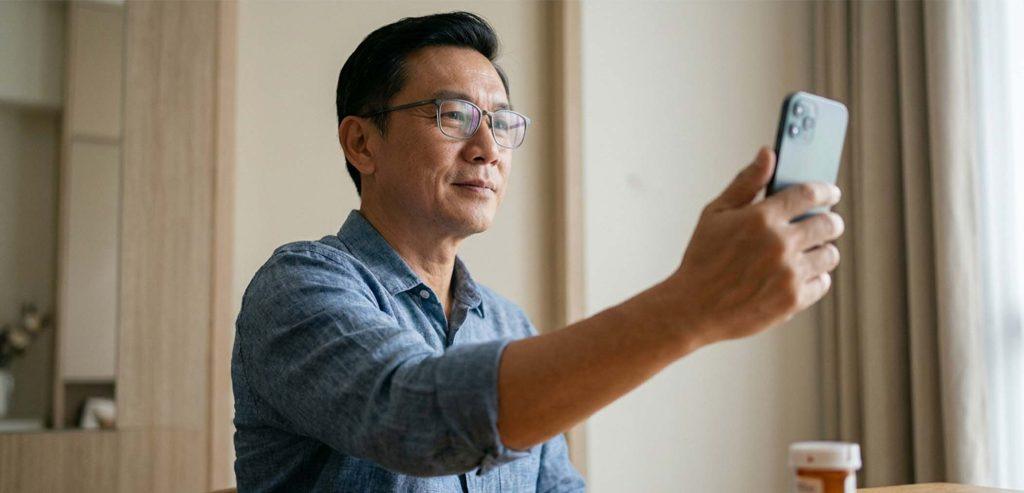
A prescription can feel wrong even when nothing dramatic has happened. The shift is gradual, and it comes from more than one direction.
The first is lens stiffening with age. The lens inside your eye slowly loses its flexibility. This process, called presbyopia, can become noticeable from your early to mid-forties. Near vision starts to blur, and you find yourself holding your phone further away to read it. A vision prescription from before this shift may not cover the near-focus changes that have since developed.
The second is gradual prescription drift. Short-sightedness and astigmatism can keep shifting in adulthood. Research shows that genetic and environmental factors can cause prescription drift even after your teenage years. So the eye prescription you received in Malaysia two or three years ago may no longer match what your eyes need today.
The third is health and medication. Blood sugar changes can temporarily shift how the eye focuses. Some medications affect the cornea or the focusing muscles. These changes are real, even when they feel subtle day to day.
How Changes in Your Daily Routine Affect Your Prescription
Three common lifestyle shifts affect how a glasses prescription performs:
1. You’re Spending More Time on Screens
Screen hours have gone up for a lot of Malaysians. Whether you are at a desk job, running your own business, or managing things remotely, you are likely spending more time on a screen than you were a few years ago. A glasses prescription set for distance may not give you clear, comfortable near vision under these conditions. If your eyes feel strained by mid-afternoon, that is worth paying attention to.
2. Your Work Environment Has Shifted
Moving from an outdoor role or varied work to a desk job changes what your prescription needs to do. The lighting is different, the screen distance shifts, and the visual demands through the day are not the same.
3. New Hobbies or Activities Are Placing Different Demands on Your Eyes
Night driving on Malaysian roads, picking up a craft hobby, or starting an instrument can expose gaps in a prescription that felt perfectly fine before. What the prescription was built for may no longer reflect how you actually use your eyes.
Signs That Your Glasses Prescription Needs Updating
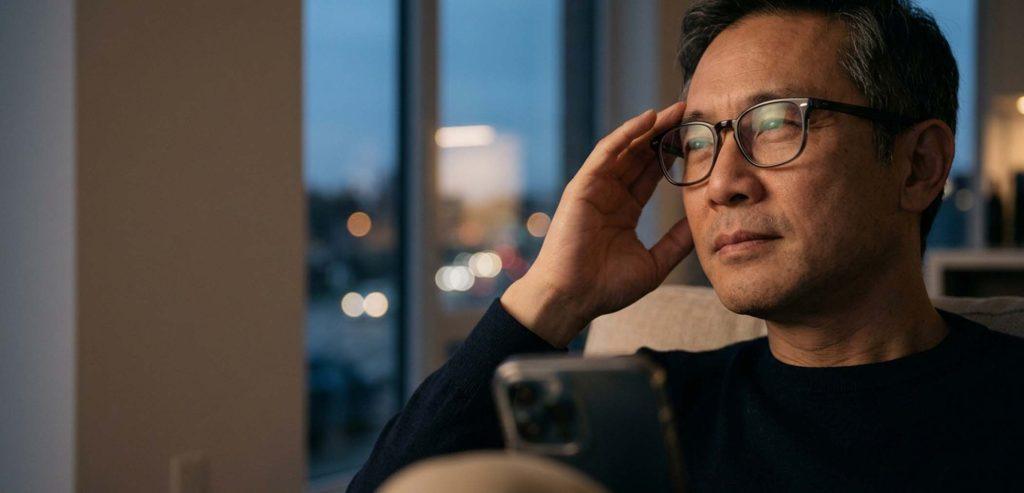
None of these signs confirm a problem on their own, but together they are a reliable signal that a prescription check is due.
1. Headaches that appear at specific times
Headaches that come on after screen sessions, during close reading, or when you are switching focus between near and far are worth noting. Eye muscles work harder to compensate for an imprecise prescription, and that effort can produce a dull ache across the forehead or behind the eyes.
2. Blurring that clears when you blink or squint
Vision that clears when you blink or squint, or that shifts through the day, suggests a glasses prescription creating strain. Steady blur across all distances is a different signal: the prescription may simply be too old.
3. Squinting or tilting your head to see clearly
If you tilt your head or squint at a screen, your eyes are working around a correction rather than using it. This happens when astigmatism has shifted, and the axis in your prescription no longer matches your eye.
4. Taking longer than usual to switch focus
Taking longer than usual to refocus when you look up from a screen or book is worth flagging. It can point to early presbyopia or a glasses prescription that is asking too much of the focusing system.
5. Glare or Halos at Night, Especially When Driving
Halos around headlights or discomfort in bright light are worth flagging, particularly if you drive at night on Malaysian roads. These can point to prescription drift or corneal changes. They are worth raising at a prescription check rather than waiting them out.
Why Prescription Changes Go Unnoticed for So Long
People delay updating their eye prescription in Malaysia because the changes are gradual. When vision shifts slowly, no clear moment signals that something is wrong. You adapt: you hold things at a slightly different distance, avoid tasks that strain your eyes, and assume fatigue is the culprit.
This adaptation is partly automatic. You can feel fine while your eyes are working harder than they should be. The difference only shows up once you try new lenses.
Small prescription changes compound quietly. What felt marginal six months ago becomes your new normal, and the gap only becomes obvious once it has been corrected.
Optometrists recommend a prescription check at least every one to two years for adults with no eye conditions. For those with progressive short-sightedness, presbyopia, or diabetes, more regular checks make sense.
A prescription check is not just about getting new glasses. It tells you whether your current ones are still doing their job, or quietly asking your eyes to compensate.
What Happens During a Prescription Check
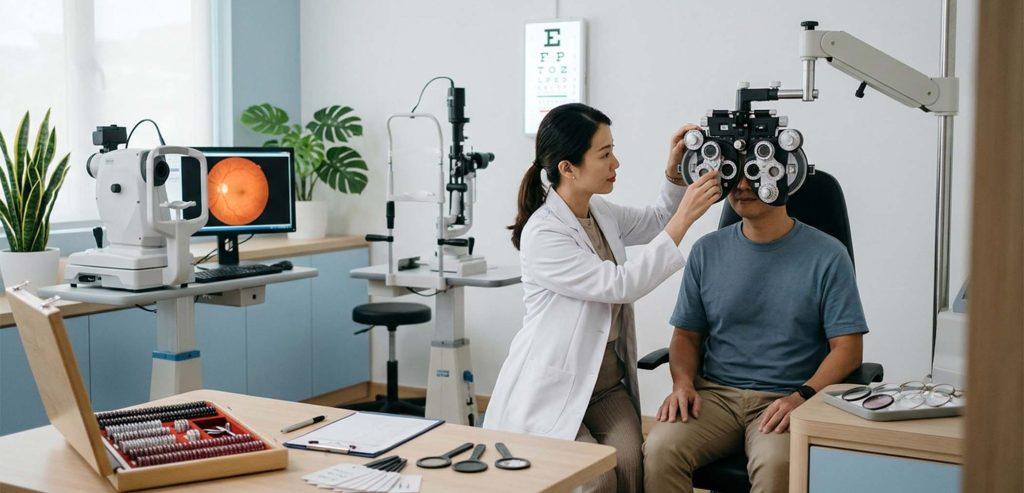
A thorough eye test at Optika Optometrist goes further than a standard refraction. In addition to measuring your current prescription, the assessment includes:
Refraction: Measuring Your Updated Prescription
Measuring your current visual error for distance, mid-range, and near to produce an updated glasses prescription.
Binocular Vision Check: How Your Eyes Work Together
Assessing how your eyes work together and whether any muscle imbalance is causing focus issues or discomfort.
Front Eye Screening: Cornea, Dry Eye and Surface Health
Examining the front surface of the eye to check for corneal changes, dry eye, and other surface conditions.
Back Eye Screening: Retinal Imaging for Early Detection
Using retinal imaging to assess the back of the eye for early signs of conditions unrelated to your prescription.
Understanding lens index and how it affects lens thickness is also part of how your optometrist translates a prescription into a practical pair of glasses. A stronger or shifted prescription may benefit from a higher-index lens.
If near vision is becoming an issue, the assessment will also flag whether multifocal lenses may suit you, and which design fits your visual tasks.
Does Your Eye Prescription in Malaysia Expire?
In Malaysia (as of 2025), a glasses prescription is considered current for one year, and contact lens prescriptions follow the same guideline. The fitting details (lens brand, base curve, and diameter) may also need reviewing alongside the prescription power.
That said, the one-year mark is a practical guideline, not a hard rule. A year with significantly increased screen use, a change in work environment, or the onset of presbyopia symptoms can make a prescription feel outdated well before twelve months are up. If you are noticing any of the signs in this article, do not wait for the one-year mark to check.
Frequently Asked Questions
1. How do I know if my old glasses prescription no longer fits my current lifestyle?
The signs in this article are your guide: headaches after screen sessions, blurring that clears when you blink, squinting or tilting your head to see clearly, and glare at night. If your daily routine has changed (more screen time, a new job setup, or you are now in the presbyopia age range) and two or more of these signs are present, a prescription check is the right step.
2. Can wearing an old glasses prescription make your eyes worse?
Wearing an incorrect glasses prescription is unlikely to cause permanent changes to your refractive error. It can cause the eye muscles to work harder than necessary, leading to fatigue, headaches, and difficulty focusing that builds over time. An outdated prescription does not damage the eye, but it does not support it properly either.
3. Is a vision prescription for glasses and contact lenses the same?
The power figures may be similar, but the prescription formats differ. A contact lens prescription also includes base curve and diameter measurements specific to the lens fitted on your eye. Using a glasses prescription to buy contact lenses, or using an old lens prescription with a new brand, is not advisable without a fitting review. Optika covers both during a prescription check.
4. I’ve started working from home and spending more time on screens. Could that be why my old prescription feels off?
Yes, this is a well-recognised reason a glasses prescription starts to feel wrong without your eyes changing dramatically. Extended screen use increases close-focus demand, which amplifies the discomfort caused by even small prescription inaccuracies. If your screen use has risen and your visual comfort has dropped, a prescription check is a sensible first step before assuming the screen itself is the problem.
5. My prescription was fine in my thirties. Why does it feel different now that my routine has changed?
Two things are likely happening at once. First, near-vision changes linked to presbyopia can begin in the early to mid-forties, meaning a prescription from your thirties may not account for how your eyes focus now. Second, if your routine involves more close work or screens than before, the demands on your focusing system have shifted. A current glasses prescription addresses both, rather than asking your eyes to compensate for a set of numbers that no longer quite fits.
Getting your eye prescription in Malaysia reviewed is not something you do only when your vision is noticeably bad. An old prescription that no longer fits your daily life causes gradual strain: headaches, variable clarity, difficulty at night.
If your screen use has increased, your work has shifted, or you are in the presbyopia age range and have not had a check-up in over a year, that is reason enough to book one. A current prescription is the simplest way to find out whether what you are experiencing is lens-related or not. Book an eye test at Optika Optometrist in Damansara Uptown and find out where your current prescription stands.