


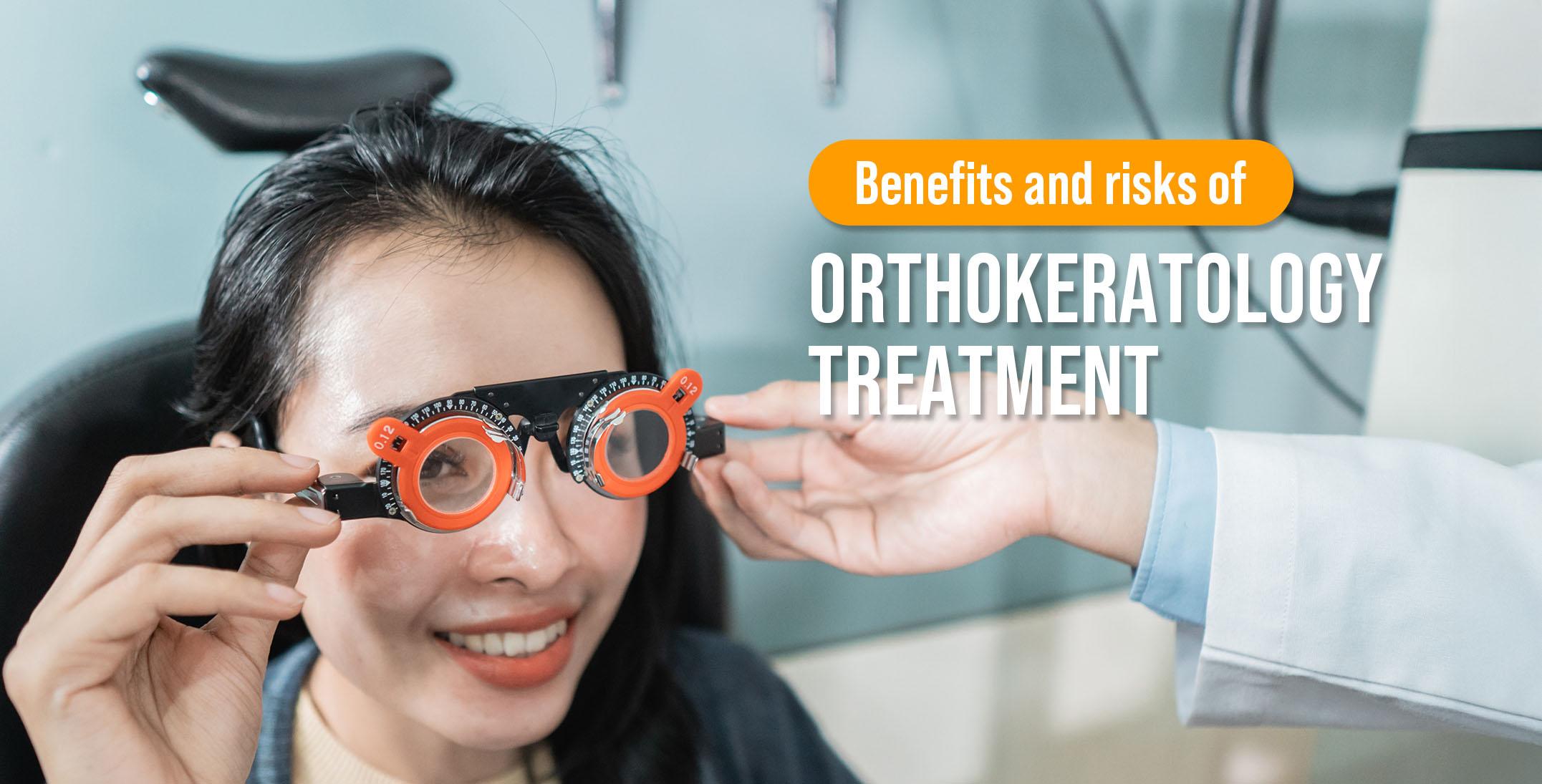
Benefits and Risks of Orthokeratology Treatment
Vision is one of our most precious senses. For many Malaysians—especially children and teens—myopia (short-sightedness) is becoming more common. Orthokeratology (often called Ortho-K) has emerged as a non-surgical treatment option that can correct vision during the day by reshaping the cornea overnight. Before deciding whether this is right for you or your child, it helps to understand both the benefits and the possible risks. If you’re searching for orthokeratology near me, this post should help you ask the right questions.
What is Orthokeratology?
Orthokeratology is a treatment using specially designed gas-permeable contact lenses worn overnight. These lenses temporarily reshape the cornea so that when you wake up and remove them, you can see clearly without spectacles or daytime contact lenses. The effect lasts usually for a day, so regular nightly use is required to maintain clear vision.
It is especially used for myopia control: slowing down how quickly the eye elongates, which is what causes worsening of short-sightedness. Optika Optometrist offers this service under controlled, clinical conditions.
Read Also: What are the Symptoms and Treatment for Short-Sightedness?
The Benefits of Orthokeratology
Here are the main advantages supported by recent research:
1. Slowing Myopia Progression
Orthokeratology has been shown to reduce axial length growth in children. In a meta-analysis of studies (age >5, myopia range –0.75 to –6.00D), the average reduction in axial elongation after one year was ~0.16 mm compared to traditional spectacles or non-Ortho-K lenses.
In another study in China, children wearing Ortho-K lenses had axial elongation of 0.27 ± 0.17 mm after one year versus 0.38 ± 0.13 mm for the control group; that’s a significant slowing, especially for younger children.
2. Reduced Dependence on Glasses or Daytime Contact Lenses
Many users enjoy clear vision during the day without needing spectacles or soft contact lenses. This is especially beneficial for sports, outdoor activities, or for those who dislike wearing glasses. Optika’s description of Ortho-K similarly emphasises this benefit.
3. High Predictability and Efficacy
In long-term studies, the outcomes are good. For those who successfully use Ortho-K for at least one year, ~88.7% of eyes in children and ~95.9% in adults achieved a refractive result within ±0.50 diopters of emmetropia (i.e., very near to no residual prescription).
4. Behavioural and Quality of Life Improvements
Users, especially children, report better satisfaction, more confidence in outdoor or physical activities without glasses, and fewer inconveniences of glasses (fogging, breakage, etc.). In satisfaction/compliance studies, over 80% report being satisfied or very satisfied.
Risks & Potential Disadvantages
While there are many benefits, Ortho-K is not risk-free nor suitable for everyone. Here are the risks and issues you should consider:
Corneal Complications (including corneal staining, infection)
Corneal staining (small abrasions or surface damage) is one of the more frequent complications. Adults tend to have a higher incidence than children.
A more serious but rare risk is microbial keratitis—infection of the cornea. For instance, in the long-term study of 300 patients, there was one event of microbial keratitis in adults over ~10,000 patient-years; none in children.
Discomfort and Adaptation Issues
Many wearers experience mild symptoms initially: irritation, tearing, lens binding (feeling like the lens is stuck), secretion, or mild discomfort. These are usually temporary and reduce as the wearer becomes accustomed, but need proper monitoring.
Tear Film, Meibomian Gland Effects
Studies show that long-term use (e.g.,>5 years) may reduce tear film stability, thin the lipid layer of tears, and cause loss of meibomian glands (which are part of the eyelid that support healthy tears). These issues are more likely in users with high myopia or male sex (in one study), though data is still evolving.
Cost, Maintenance, Commitment
Ortho-K lenses are custom-made, require regular replacement, and necessitate strict cleaning and hygiene routines, as well as periodic check-ups. There are financial costs, time costs (nightly wear, care), and risks if follow-ups are neglected. Also, if treatment is discontinued, the cornea returns to its former shape so that myopia may worsen again.
Limitations by Prescription & Corneal Shape
Best suited for mild to moderate myopia (commonly up to −6.00D) and low to moderate astigmatism. Significant refractive error, irregular corneas, certain corneal diseases, or unsuitable corneal curvature may make the treatment less effective or unsafe.

What Malaysian Data Tells Us
Although much of the research comes from studies in East Asia (China, Taiwan, etc.), there is growing awareness in Malaysia, with clinics like Optika Optometrist and others offering Ortho-K services. Some local reports highlight rising myopia rates among young people (for example, prevalence increasing sharply between ages 7 and 15), which drives demand for interventions like orthokeratology.
However, there is a scarcity of published large-scale longitudinal data specific to Malaysia comparing outcomes, complications, and long-term effects versus spectacle wearers. This means that while general evidence is positive, local follow-ups and clinic-by-clinic monitoring are very important.
Read Next: Contact Lens Wear and Dry Eye: Beyond the Known
How to Decide If Ortho-K Is Right for You or Your Child
If you are considering Ortho-K and wondering about “orthokeratology near me,” here are factors to discuss with your optometrist:
- Current prescription (myopia & astigmatism)
- Age (younger children often benefit more from myopia-slowing effects, but need more supervision)
- Corneal health and shape (are there irregularities? Dry eye? Allergies?)
- Ability to maintain hygiene and follow up regularly
- Cost of lenses + replacements + check-ups
- Expectations: how much you want to reduce dependence on glasses, willingness to commit to nightly wear

FAQs
Q1. How long does it take to see results after starting orthokeratology?
A: Many users notice improved vision after the first night or within a few nights, but stability generally takes 1-2 weeks. Full effect (peak reshaping) may take several weeks. Adult corneas may reshape more slowly than children’s.
Q2. Can orthokeratology cause permanent damage to the eyes?
A: Permanent damage is rare, provided lenses are properly fitted, hygiene is strictly followed, and regular check-ups are done. Serious risks like microbial keratitis are very uncommon—e.g., ~6.8 cases per 10,000 patient-years in one long-term study in adults. However, milder risks (staining, discomfort, tear film changes) are more common.
Q3. Will stopping orthokeratology make the myopia worsen rapidly?
A: If you stop wearing the Ortho-K lenses, your cornea will gradually return to its natural shape (over days to weeks), and vision will typically revert to needing glasses. Some rebound in myopia progression may occur, especially in children, if no other control methods are used. Research indicates that rebound happens after stopping Ortho-K compared to continuous use.
Conclusion
Orthokeratology offers an appealing solution for many Malaysians who wish for vision correction without surgery, or wish to slow down the progression of myopia in children. The benefits—clear vision during daytime without glasses, efficacy in myopia control, and high satisfaction—are well documented.
However, it is not risk-free. Proper fitting, excellent hygiene, consistent follow-ups, and realistic expectations are essential. When exploring “orthokeratology near me”, choosing a reputable clinic with experience, trained staff, good patient support, and documented safety is crucial.
At Optika Optometrist, we strive to provide accurate assessment, customised lens fitting, thorough patient education, and long-term follow-up. If you’d like to learn more or check whether you are a good candidate, book a consultation with us.