



Designer Eyewear in Malaysia: What Will Define Smart Buying [2026]
Key Takeaway
- Designer eyewear in Malaysia is no longer just about brand recognition. Smart buyers in 2026 are asking harder questions about frame construction, lens compatibility, and authorised retail provenance.
- The global luxury eyewear market was valued at around USD 30 billion in 2024, with Asia-Pacific demand growing fastest among emerging markets.
- Counterfeit branded eyewear is a genuine risk in Malaysia. Buying through an authorised optometrist practice rather than unverified retail channels is the clearest protection.
- Premium eyewear earns its price through material quality, production steps, and fit, not just the name on the temple. Knowing the difference helps buyers choose with more confidence.
- Prescription compatibility and professional fitting matter as much as design. A beautiful frame that doesn’t align with your lens prescription doesn’t perform.
Introduction
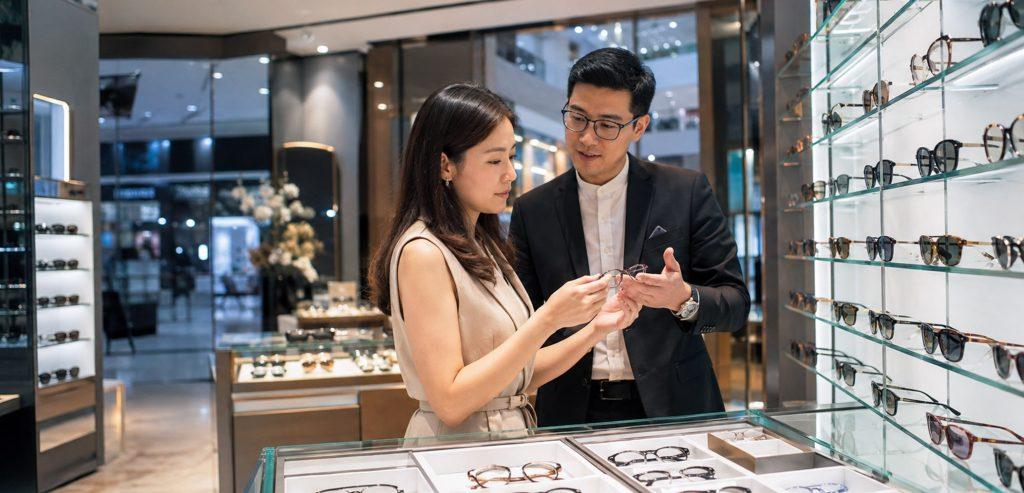
Walk through any mid-to-high-end mall in the Klang Valley and the designer eyewear options have expanded noticeably. Labels that were once only available through grey market importers or international trips are now carried by specialist boutiques and authorised optical practices. For buyers who know exactly what they want, this is a welcome development. For those still figuring out how to evaluate a frame that costs five to fifteen times the price of a standard optical product, the wider selection raises more questions than it answers.
The designer eyewear market in Malaysia is maturing, and that shift brings both more genuine choice and more risk. Counterfeit frames, incorrect lens fittings, and frames sold without proper warranty have become familiar problems for buyers who prioritise price over provenance. Meanwhile, the category itself has widened. The range in 2026 spans fashion-house collections, independent Japanese artisan brands, and century-old optical houses, each with a different value proposition and a different buying consideration.
This guide is for the buyer who wants to spend well rather than just spend. It covers what separates a genuinely considered purchase from an impulsive one, what the main production distinctions between brands actually mean, and what to verify before committing.
What Is Designer Eyewear Malaysia?
This category refers to optical frames and sunglasses from established premium and luxury brands, sold through authorised channels in the Malaysian market. The category spans fashion-house collections produced under licensing arrangements (such as Tom Ford or Thom Browne), independent specialist eyewear brands with vertically integrated production (such as DITA, MOSCOT, or ic! Berlin), and Japanese craft-focused labels made in limited runs in Sabae or Fukui Prefecture. What unites them is production quality, design investment, and material specification above the mass market. Prices typically begin around RM1,500 and extend well beyond RM5,000 for limited-run or full-titanium collections. Some bespoke collections from Japanese craft houses, particularly Masahiro Maruyama, command significantly higher prices for hand-finished single-run pieces.
Why the Designer Eyewear Market in Malaysia Is Changing in 2026
The global luxury eyewear market was estimated at around USD 30 billion in 2024, with Asia-Pacific identified as a key growth region as disposable incomes and brand awareness rise across urban markets. Malaysia fits that pattern. The Klang Valley’s professional and upper-middle consumer demographic has grown more familiar with these luxury labels over the past five years, partly through travel, partly through social media, and partly through the expansion of authorised stockists in the country.
Two changes are particularly relevant for buyers in 2026. First, the availability of genuine designer frames through authorised local retailers has improved significantly. Buyers no longer need to import frames or rely on unverified third-party sellers for access to labels like DITA or Masahiro Maruyama. Second, counterfeit frames have become more sophisticated. Imitation frames now replicate packaging, temple engravings, and even hinge hardware with enough accuracy to mislead buyers who don’t know what authentic construction actually looks or feels like.
The result is a market where buying smart requires more specific knowledge than simply recognising a name.
The Three Questions Smart Buyers Ask Before Choosing

1. Is This an Authorised Channel?
This is the first question, and it matters more than any other. Authorised retailers receive stock directly from the brand, carry genuine warranty documentation, and have staff trained to fit and adjust the specific frame. An unauthorised seller may carry what appears to be the same product at a lower price, but without brand warranty, without guarantee of authenticity, and without the dispensing expertise that makes the frame perform on your face.
In Malaysia, the safest check is to visit the brand’s official website and confirm which local retailers appear on their authorised dealer list. For brands like DITA, MOSCOT, and Thom Browne, Optika Optometrist appears as a confirmed authorised stockist. If a seller isn’t on that list, the risk of receiving a counterfeit or grey-market import rises significantly.
Authorised retail isn’t just a purchasing formality. It’s the mechanism that ensures what you’re paying for is what you receive, that the product comes with a legitimate brand warranty, and that someone trained can adjust the frame to your face correctly.
The Thom Browne Malaysia buying guide on the Optika blog explains this in detail for that brand specifically, including how to verify authentic temple engravings and packaging. The same authentication principles apply across the luxury glasses Malaysia category broadly.
2. Does the Frame Suit Your Specific Prescription?
Most buyers ask about style and brand before they ask about prescription compatibility. This is the wrong order. Some frame shapes and sizes are structurally unsuitable for high-power or complex prescriptions. A frame with a very large lens aperture, for instance, increases lens thickness for myopic wearers because more lens material sits outside the optical centre. A very small or curved frame creates centration challenges for progressive lens wearers.
A professional optometrist evaluates frame suitability alongside prescription before finalising a purchase. This isn’t routine in fashion retail environments where eyewear is sold. It is standard practice at an optical practice where the dispensing professional treats the frame as a clinical tool, not only a style item. The comprehensive eye test at Optika includes pupillary distance measurement and prescription assessment that directly informs which frames will perform well for your specific visual needs.
3. What Is the Frame Actually Made From?
The price difference between an RM400 optical frame and a RM3,500 designer frame reflects real differences in material and production. Knowing what those differences are helps buyers evaluate whether a specific frame justifies the price or whether the premium is largely carried by the brand name.
Acetate quality varies significantly. Premium brands use Japanese cellulose acetate from manufacturers like Mazzucchelli or Takiron, which polishes to a deeper lustre, holds colour longer, and resists surface cracking better than standard acetate. Low-cost acetate alternatives may look identical in photographs but feel lighter and less substantial in hand.
Titanium specification matters. Pure titanium, beta-titanium, and titanium alloy are distinct materials with different weights, flexibility, and corrosion resistance. A frame marketed as “titanium” without specifying the grade may use a lower-specification alloy that corrodes at the nose pad contact points within a year of regular wear in Malaysia’s humidity. Beta-titanium, used by brands like Silhouette and 999.9 Four Nines, has a spring memory that lets the frame flex and return to shape. This property extends frame life significantly compared to standard titanium or stainless alloys.
Hinge construction distinguishes longevity. A barrel hinge with three or five interlocking leaves survives far more open-close cycles than a simple pin-and-spring. Brands like Kaneko Optical, which uses a five-tenon hinge design, build structural longevity into the construction that cheaper alternatives don’t match.
What Premium Eyewear Brands Are Actually Telling You
The designer eyewear landscape in Malaysia includes several meaningfully different production philosophies, and understanding what each brand represents helps buyers choose by value rather than by logo.
Fashion-house licensed brands (Tom Ford, Thom Browne, certain Gucci and Prada collections) are designed in-house by the fashion label but manufactured by specialist optical production groups like Marcolin or Safilo. Tom Ford eyewear, for example, is produced by Marcolin in Italy under a long-standing licensing arrangement that has maintained the brand’s optical quality standards consistently. The design language, colourways, and seasonal collections are entirely Tom Ford’s. The production discipline behind the frame belongs to Marcolin’s Italian facilities, which hold their own credibility in the optical manufacturing world. The design language is entirely the fashion house’s; the material and optical quality meet the standard set by the licensor, and the price reflects both the production cost and the fashion brand premium.
Independent specialist brands (DITA, ic! Berlin, Native Sons) exist only in the eyewear space. Their production investment goes entirely into the frame, not into supporting a wider fashion brand structure. DITA’s up to 350 production steps and eight-month production cycle represent a different value proposition from a licensed fashion frame made to a shorter timeline.
Japanese craft brands (Masunaga, Masahiro Maruyama, 999.9 Four Nines, Kaneko Optical, Yellows Plus) are produced in Fukui Prefecture’s Sabae manufacturing district, which produces around 96% of all optical frames made in Japan. These brands typically make fewer units, use hand-finishing at multiple stages, and are designed around Asian facial geometry from the outset. The fit benefit for Malaysian buyers is a direct result of that engineering.
The future of eyewear in Malaysia blog from Optika covers how these production and technology trends are reshaping the local optical market, including the growing availability of prescription-compatible smart eyewear and sustainable frame materials.
Is Designer Eyewear Malaysia Worth Buying in 2026?
Smart buyers in 2026 approach these frames as a long-term purchase, not a seasonal accessory. A well-made frame from an established brand, bought through an authorised channel, fitted correctly to your face and prescription, and maintained properly, can last a decade or more. The per-year cost of a RM4,000 frame worn for eight years compares differently to the accumulated cost of replacing RM400 frames every eighteen months.
The caveat is the word “correctly.” A premium frame bought online, at a discount through an unverified seller, or fitted by someone without clinical dispensing training, doesn’t deliver the performance the price should buy. The frame is only part of the purchase. The fitting, the lens selection, and the dispensing optometrist’s assessment make up the rest of it.
For buyers in Malaysia who are ready to spend seriously on premium frames, the buying decision is as much about choosing the right practice as choosing the right brand.
Frequently Asked Questions

1. Where can I buy genuine designer frames in Malaysia?
Buy from authorised retailers confirmed on the brand’s official dealer list. In Malaysia, Optika Optometrist in Damansara Uptown is an authorised stockist for DITA, MOSCOT, Tom Ford, Thom Browne, Masunaga, Silhouette, Kaneko Optical, Yellows Plus, and other premium brands. Authorised retailers carry genuine warranty documentation and have optometrists who can fit and adjust the frame professionally.
2. How do I tell if luxury glasses in Malaysia are authentic?
Authentic frames carry precise temple engravings including brand name, model, size, and country of manufacture. Genuine packaging includes brand-matched cases and polishing cloths with correct stitching and markings. Hinge quality is often the clearest physical tell: genuine luxury frames have smooth, controlled hinge movement with no play, while imitations often feel slightly loose or produce a different sound when opened and closed. Buying from an authorised retailer removes the need to verify independently.
3. What is the difference between premium eyewear and fashion eyewear?
Specialist eyewear brands prioritise frame construction quality, material specification, and optical performance as primary criteria. Fashion eyewear uses brand design language as the primary selling point, with production quality varying by the manufacturer and licensing arrangement. The two overlap significantly in the higher-end fashion collections, but a specialist eyewear brand like DITA or 999.9 Four Nines allocates more of the unit cost to frame engineering than a fashion-house licensed collection at the same price point.
4. Can branded eyewear be fitted with any prescription lens?
Not always. Frame shape, size, and lens aperture dimensions affect which prescription types can be fitted without compromising optical performance. Very large apertures increase edge thickness in myopic prescriptions. Strongly curved frames create centration issues for progressive lenses. An optometrist assesses prescription compatibility before confirming a frame purchase, which is one reason buying through an optical practice matters more for premium frames than for basic optical products.
5. Is it worth buying designer eyewear online in Malaysia?
The risk is higher than buying in person through an authorised practice. Online channels can’t verify frame authenticity at the point of purchase, can’t professionally fit or adjust the frame to your face, and can’t assess lens-to-frame compatibility for your specific prescription. For designer frames at premium prices, the fitting appointment is part of the purchase’s value. Buying online removes it.
Buying designer eyewear in Malaysia in 2026 rewards buyers who treat the purchase as they would any considered investment: by understanding what they’re actually buying, who they’re buying it from, and what the ongoing relationship with the product looks like. The brands carried at Optika Optometrist span the full range of production philosophies outlined above, from independent specialist labels to Japanese craft houses and fashion-house collections. Each comes with professional fitting, a genuine warranty, and a clinical dispensing assessment that turns a beautiful frame into a well-performing one.