


Why a Regular Eye Check-Up Matters Even When Your Vision Feels Fine
Key Takeaway
- A regular eye checkup detects glaucoma, diabetic retinopathy, and macular degeneration before you feel any symptoms, because clear vision does not confirm that the internal structures of your eye are healthy.
- Glaucoma can damage up to 80% of the optic nerve fibres before any vision change is noticed, and once lost, that damage is permanent.
- Adults with no known eye conditions should have a vision check at least every two years; those over 50 or with diabetes, high blood pressure, or a family history of eye disease should go annually.
- The retinal blood vessels are directly visible during an eye examination, and they can show signs of hypertension and diabetes before any other symptom appears elsewhere in the body.
- Optika Optometrist in Petaling Jaya offers a comprehensive eye test that covers prescription, eye pressure, retinal health, and binocular function in a single visit.
Introduction
People tend to book an eye check when something changes: words on a screen start blurring, night driving becomes harder, or a persistent headache prompts a visit. That is a reasonable response to a problem. The trouble is, many conditions an optometrist can detect have no early symptoms at all.
Glaucoma is the most cited example. Damage to the optic nerve can be substantial before any vision change is noticed. By that stage, any damage that has occurred is permanent. The same pattern applies to diabetic retinopathy and early-stage macular degeneration: the window for effective intervention is earlier than the symptoms suggest, and it is only visible through an examination.
A regular eye checkup is what makes that early detection possible. It is not a response to a problem. It is the reason a problem can be caught before it becomes one.
What Does a Regular Eye Check Up Actually Check?
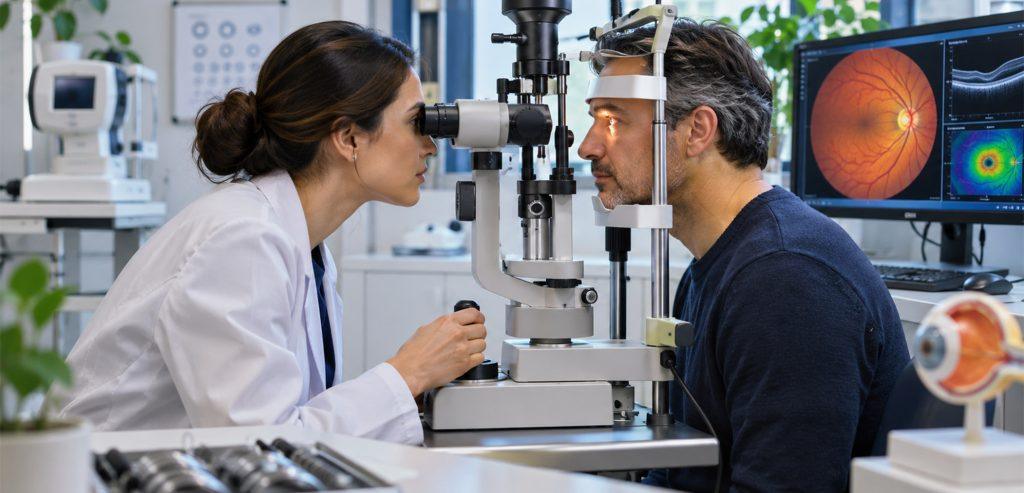
A routine eye examination assesses the health of the internal structures of the eye: the retina, the optic nerve, and the intraocular pressure, all of which can show signs of disease before any symptom is felt. That is separate from your prescription, and it is what gets missed when regular visits are skipped.
At Optika, a comprehensive eye test includes a visual acuity assessment, retinal examination, and pressure measurement, among other checks.
The retina is particularly useful diagnostically. Because the blood vessels at the back of the eye are directly visible during examination, they can reveal signs of conditions beyond the eye itself. Hypertension and diabetes both produce changes in the retinal vasculature that an experienced optometrist can identify. For some patients, an eye check has been the first indication that blood pressure is elevated or that blood sugar management needs attention.
An eye examination gives a view inside the body that no other routine health check provides, and that is what makes it worth doing even when everything seems fine.
Which Conditions Can an Eye Check Up Detect Early?
A number of serious eye conditions progress without warning, which is precisely why a regular eye checkup matters for people who feel their vision is unchanged.
Glaucoma develops as damage to the optic nerve, primarily from elevated intraocular pressure. Because the damage begins in the peripheral visual field, central vision can remain clear until the condition is advanced. Symptoms appear only after around 80% of optic nerve fibres have been affected, according to eye health specialists. Once lost, that nerve function does not return. Detecting elevated pressure early is what makes management possible.
Diabetic retinopathy is the leading cause of vision loss in working-age adults with diabetes. It develops from damage to the small blood vessels in the retina and can be present without any change in vision in its early stages. Regular retinal checks for anyone with diabetes are not optional; they are part of managing the condition.
Age-related macular degeneration affects central vision and tends to develop gradually. Early-stage AMD is detectable through examination before any functional impact is felt, and certain lifestyle and supplementation approaches can slow its progression when it is identified at that stage.
Refractive changes are easier to spot and correct, but they matter too. Uncorrected prescriptions cause sustained eye strain, headaches, and fatigue. All of these are entirely preventable with an updated correction.
| Condition | Early symptoms | Detectable at checkup? |
| Glaucoma | None | Yes |
| Diabetic retinopathy | None | Yes |
| Age-related macular degeneration | Subtle central blur | Yes |
| Hypertension (via retina) | None | Yes |
| Refractive error | Strain, headaches | Yes |
Across this list, the conditions with the gravest long-term consequences are the ones with the least obvious early signs.
How Often Should You Have a Vision Check?

The recommended frequency for a vision check depends on age, risk profile, and whether any conditions are already being monitored.
For adults with no known eye conditions and no significant risk factors, a check every two years is a reasonable baseline, according to guidance from eye care providers. Adults over 50, or those with diabetes, elevated blood pressure, a family history of glaucoma or macular degeneration, or who wear glasses or contact lenses, should consider an annual optometrist check-up.
Malaysian ophthalmologists have echoed this. Dr Calvin Lim, speaking to Malay Mail, recommends that adults around age 40 have a complete eye examination as a baseline, with those aged 60 and above returning every one to two years. Adults in their 20s and 30s who wear glasses, have a family history of eye disease, or take medications that can affect the eyes should not wait until 40.
The simplest framework: if you have not had an eye examination in the past two years and you do not have a known condition, it is time to book one.
Glaucoma cannot be reversed, but its progression can be managed when intraocular pressure is caught early. A two-year gap in monitoring is long enough for meaningful damage to occur without any warning.
What Happens During Eye Screening at Optika?
Eye screening in Malaysia at a practice like Optika covers several components, all of which are non-invasive. The full assessment takes around 30 to 45 minutes.
The assessment includes:
- Visual acuity test: checking how clearly you can see at different distances, with and without correction.
- Refraction: determining whether a prescription is needed, or whether your current one needs updating.
- Intraocular pressure measurement: checking for elevated pressure, one of the main indicators for glaucoma risk.
- Retinal examination: examining the back of the eye for signs of retinal health, optic nerve condition, and systemic health indicators.
- Binocular vision assessment: checking how both eyes work together, which affects focus and depth perception.
If dilation drops are used for the retinal examination, you may need around 20 to 30 minutes for your vision to return to normal before driving. The team at Optika can advise on this when you book. If you are also thinking about updating your frames, it is worth knowing the difference between buying frames and getting a proper eyeglasses fitting, since both can be arranged in a single visit.
Frequently Asked Questions
1. How often should I get a regular eye checkup if my vision seems fine?
Adults with no known eye conditions should have a regular eye checkup at least every two years. If you are over 50, have diabetes or high blood pressure, or have a family history of glaucoma or macular degeneration, an annual check is more appropriate. Clear vision does not confirm that the eye structures are healthy, which is why the interval matters regardless of how your sight feels.
2. What is included in an optometrist checkup at Optika Optometrist?
An optometrist checkup at Optika Optometrist includes a visual acuity assessment, refraction, intraocular pressure measurement, retinal examination, and binocular vision assessment. The full picture of your eye health, not just your prescription, is what a comprehensive examination covers.
3. Can an eye checkup detect conditions other than vision problems?
Yes. Because the retinal blood vessels are directly visible during examination, an eye checkup can show signs of systemic conditions including hypertension and diabetes, sometimes before other symptoms appear. Optometrists are trained to identify these signs and will refer you to the appropriate specialist if anything is found.
4. Is eye screening in Malaysia necessary if I already wear glasses?
Yes. Wearing glasses means your prescription is being managed, but it does not mean the internal health of your eye is being monitored. Glaucoma, diabetic retinopathy, and macular degeneration can develop independently of whether you wear a prescription. Eye screening in Malaysia at a comprehensive practice checks both.
5. At what age should I start having regular eye examinations?
Adults should have a baseline comprehensive examination by their early 40s at the latest. If you are in your 20s or 30s and wear glasses, have a family history of eye disease, or take long-term medications that can affect the eyes, an earlier check is appropriate. Those with no risk factors and clear vision can start at 40, then follow the two-year or annual schedule based on what the examination finds.
Glaucoma, diabetic retinopathy, and macular degeneration share one thing: they give no warning until the damage is done. A regular eye checkup does not prevent those conditions, but it is the only way to find them early enough for treatment to make a difference.
At Optika in Damansara Uptown, a comprehensive eye test covers your prescription, intraocular pressure, retinal health, and binocular function in a single visit. If it has been more than two years, or you have never had a full adult examination, that is reason enough to book one.